Irrigation
Sprinklers vs Drip Irrigation in Los Angeles: What Works Where?
By ABC LandCrafters |
Lawns often need sprinklers; planting beds often work better with drip. For a mixed Los Angeles yard, the practical answer is usually both, on separately controlled zones. Choose the layout around what will stay, what will change, and how each area needs water.
Match the method to the area
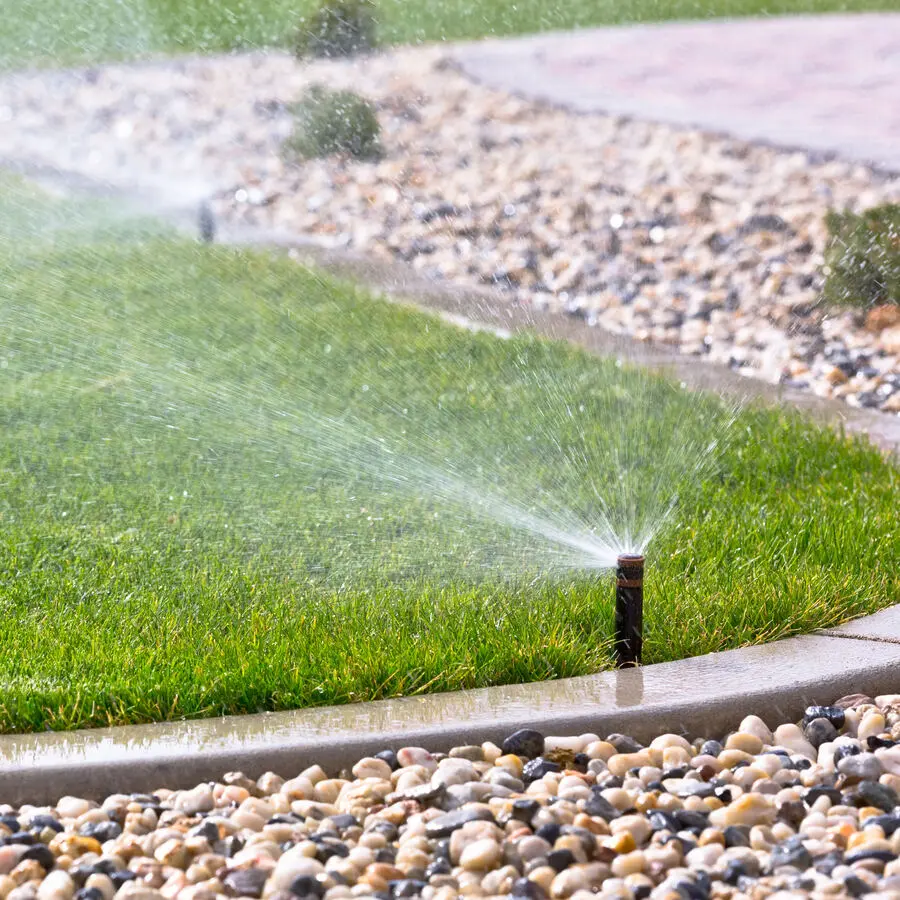
- Open lawn: Sprinklers are a common starting point for broad, continuous coverage.
- Shrub and perennial beds: Surface drip uses tubing at soil level, sometimes beneath mulch, to water planted root areas.
- Narrow planted strips and containers: Consider drip, but group plants by compatible watering needs rather than proximity alone.
- Subsurface lawn drip: Drip can serve turf through a specialized below-ground design. Do not treat it as simply burying ordinary bed tubing; discuss monitoring and maintenance before committing.
Sprinklers: prioritize even lawn coverage
According to UC IPM's irrigation overview, sprinklers suit areas with similar water needs, including turfgrass, but wind can disrupt distribution.
During renovation, check whether new lawn edges still match the existing spray pattern. A head aimed at a former lawn corner may now water a walkway.
Ask about nozzle compatibility within each zone. Mixing heads or nozzles with different application rates can leave one area wet and another dry. A longer runtime does not correct that mismatch. Resolve the layout before sod installation; establishment care is covered separately in our new sod watering guide.
Drip: plan for inspection and growth
The EPA's microirrigation overview describes slow, low-flow watering near roots. In planting beds, place emitters around the plants rather than just following the bed's outline.
Inspect the system while running: look for leaks, damaged tubing, and outlets that are not delivering water. Check soil moisture too. As roots spread, revisit emitter placement and the wetted area; an outlet beside a young plant may not remain sufficient.
Separate zones do not require separate controllers
A zone is an area watered through a valve; one controller can operate multiple valves on different schedules. Keep drip on separate stations from standard sprays because their delivery rates and scheduling needs differ.
The EPA's microirrigation technical sheet explains drip's need for appropriate pressure regulation, filtration, and flushing. A conversion should address those requirements rather than just replace a spray head with tubing.
Have the contractor assess existing valves, piping, water pressure, available flow, and controller capacity before deciding what can be reused. Separate areas further when plant needs or exposure warrant it.
A hypothetical mixed-yard plan
Imagine a homeowner keeping a rectangular lawn and adding a planted border. A proposed plan might retain suitable lawn sprinklers on one valve and add drip on another. If the border contains plants with very different water needs, the planting or zoning may need revision.
This is an illustration, not a completed ABC LandCrafters project.
Before covering a former lawn
Before replacing grass with gravel, decomposed granite (DG), or artificial turf, identify trees and shrubs that have depended on lawn watering. Their roots may extend into the area being converted.
Do not simply cap the lawn lines and assume nearby plants will manage. Include a replacement watering plan for retained plants before demolition, and protect roots during the work.
What to bring, and what to get in writing
Show the contractor:
- Your renovation sketch, plants being retained, planned lawn boundaries, and new paths or patios.
- Controller and valve locations, known repairs, and any available irrigation layout.
- Dry patches, persistent wet spots, runoff areas, sun and shade differences, and your maintenance expectations.
Ask the written estimate to explain:
- Which lines, valves, heads, and controller components stay, change, or are removed.
- The proposed zones, drip filtration and pressure regulation, and how coverage will be checked.
- Trenching, surface restoration, testing, cleanup, and the operating instructions included in the scope.
New installation cost depends on the area served, zone count, access, and routing around finished surfaces. Retrofit cost also depends on hidden pipe condition, compatibility, and the work needed to separate shared zones. Reusing equipment may reduce replacement work, but a retrofit is not automatically the cheaper choice. Compare scopes, not just totals.
Adjust for fall conditions, not just the date
An October calendar date is not a watering prescription. Check soil moisture below the surface in several representative root areas, then consider recent rain, weather, plant needs, and your water utility's current rules.
The EPA's watering tips recommend adjusting irrigation to conditions. If runoff occurs, shorter cycles with soak breaks may help, where utility rules allow; also investigate coverage or soil problems. A smart controller can adjust schedules, but it cannot repair leaks or mismatched coverage.
Plan irrigation with the renovation
Based in Sherman Oaks, ABC LandCrafters provides irrigation installation and updates throughout Los Angeles, the San Fernando Valley, and nearby communities. To discuss your lawn and planting plan, request an irrigation consultation or call 818-699-1516.
Frequently Asked Questions
Can I convert sprinklers to drip without replacing the whole system?
Possibly. Existing piping and valves may be reusable, but pressure, filtration, condition, and zone separation need evaluation. Ask the estimate to distinguish reusable equipment from required changes.
Is drip always more water-efficient?
No method guarantees savings. Drip can target roots, but leaks, poor placement, or an unsuitable schedule can still waste water. Judge the complete design and maintenance plan.
Can one controller handle both sprinkler and drip zones?
Often, yes, if it has suitable capacity and programming options. Separate valves let the two methods run on appropriate schedules; installing a second controller is not automatically necessary.
Does a smart controller fix dry patches?
No. It adjusts scheduling, not water distribution. Dry patches still require checking coverage, nozzle compatibility, leaks, and soil moisture rather than simply increasing runtime.
How should I compare two irrigation estimates?
Compare zone layouts, retained equipment, filtration and pressure regulation, trenching and restoration, testing, and handoff instructions. A lower total may cover less work, so ask about omissions before choosing.
Discuss Your Yard's Irrigation Plan
Bring your lawn and planting plans, existing system details, and problem areas to a site review.
Request a Consultation